

Touws River
A small railway town on the southwestern edge of the Karoo, 180 kilometres northeast of Cape Town, that exists because of the Cape Government Railway line to Kimberley. The steam locomotive era built this place, and the slow decline since has left it honest and unchanged.
Town Info
- ProvinceWestern Cape
- DistrictCape Winelands District Municipality
- MunicipalityBreede Valley Local Municipality
- Population8,126
- Postal Code6880
About the Town
Touws River came into existence because of a single engineering problem: how to get a railway line from Cape Town to the diamond fields at Kimberley over the Hex River Mountains. The Worcester to Matjiesfontein line opened in 1877, and the station originally named Montagu Road was established at the point where the track crosses the Touws River. It was renamed Touws River in 1883. For decades it was a critical locomotive depot — the steam engines that had climbed the Hex River Pass from Worcester were changed here before continuing northeast across the Karoo.
The railway history is still legible in the town's layout and architecture. The station buildings, the locomotive shed, the water tower — the bones of a working railway depot are still standing, although the operational role is gone. Matjiesfontein, one of the best-preserved Victorian railway villages in South Africa, is about 20 kilometres northeast on the N1 and makes a natural pairing with Touws River for anyone interested in the railway era of the Cape.
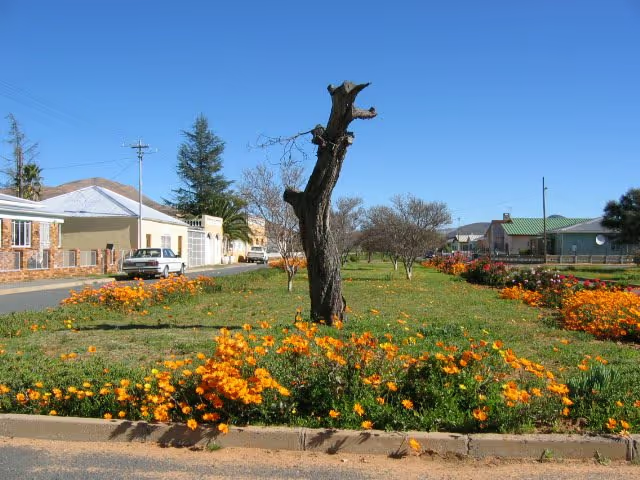
The town sits at the point where the Cape Winelands meets the Karoo, at about 770 metres elevation, east of the Hex River Mountains and north of the Langeberg. The landscape is dramatic — open plateau, mountain silhouettes, the particular quality of light that the Karoo does. The Hex River Valley is 35 kilometres west, the vast flat interior stretches north and east. The night skies are exceptional.
Touws River is struggling in the way many single-industry South African towns have struggled since the industry changed. The population of 8,000 is mostly dependent on agriculture and whatever remains of the railway services. The infrastructure is functional but worn. What it offers is authenticity and access to a landscape most people pass through on the N1 without stopping.
Eat, sleep and drink
Where to eat
Kroonplaas Padstal
Where to sleep
Gecko Rock Private Nature Reserve (25 km)
Where to drink
Do you know this town better than I do?
If you live here, grew up here, or spent real time here, I want to hear from you. A photo, a correction, a story, a tip. Anything that makes this page more honest is welcome.
Join the Community
200,000+ South Africans already in the Facebook group. Weekly small-town stories, road trip tips, and hidden gems.