

Tulbagh
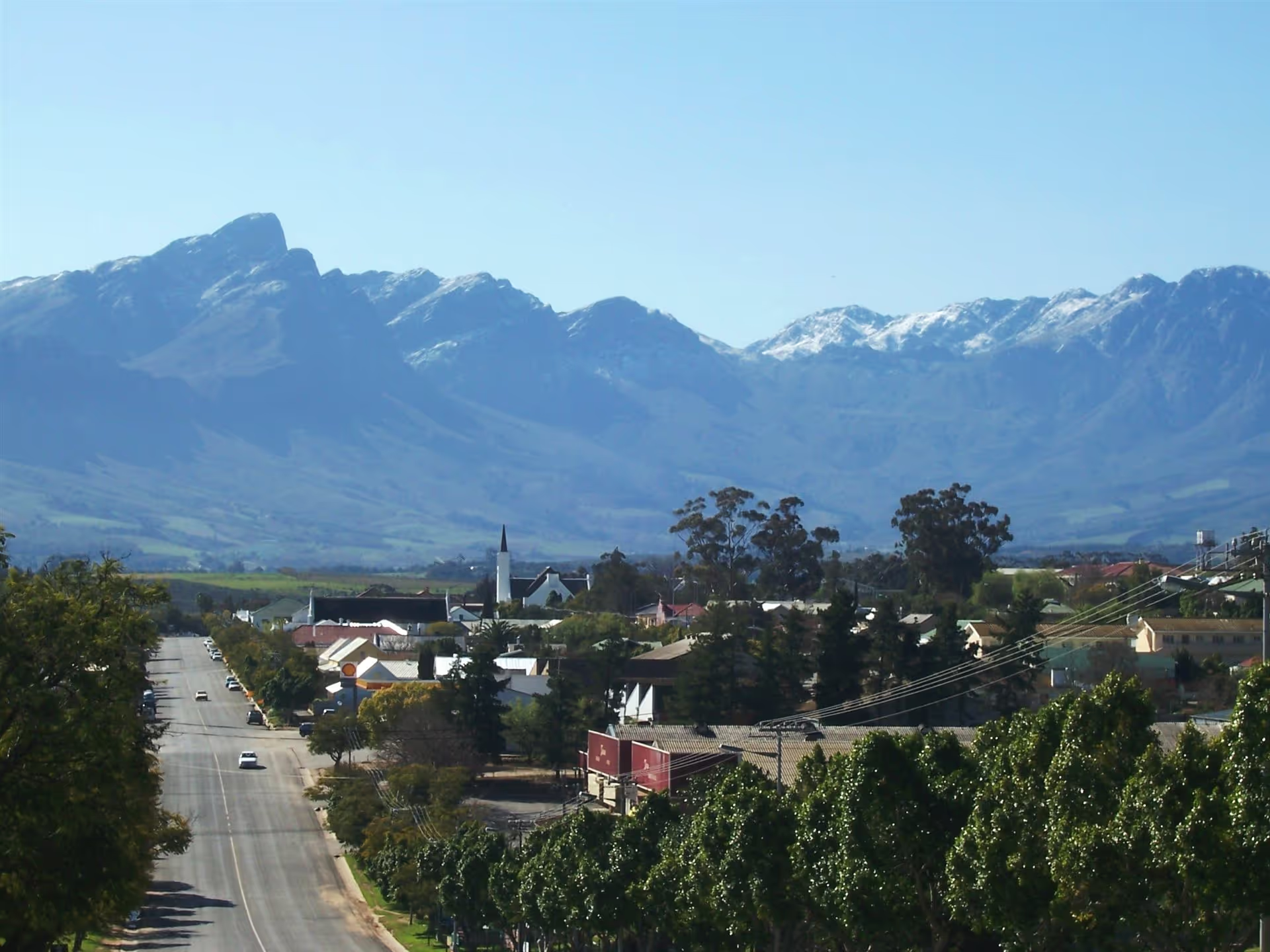
A mountain-basin wine town in the Cape Winelands with the largest concentration of provincial heritage buildings on a single street in South Africa, every one of them rebuilt after the 6.3-magnitude earthquake that flattened Church Street in September 1969.
Town Info
- ProvinceWestern Cape
- DistrictCape Winelands District Municipality
- MunicipalityWitzenberg Local Municipality
- Population8,969
- Postal Code6820
About the Town
On 29 September 1969, a magnitude 6.3 earthquake struck near Ceres, and the shockwave tore through the Tulbagh Valley. Church Street, lined with Cape Dutch, Victorian, and Edwardian buildings dating back more than 200 years, was largely destroyed. What happened next was unusual: the community rebuilt it exactly as it was. All 32 buildings were restored using original methods and materials. The result is the largest concentration of declared national monuments on a single street in South Africa, and unlike most heritage sites, they are occupied, functional, and lived in.
Tulbagh is one of the four oldest towns in South Africa, founded in the fertile Land van Waveren basin and named after Cape Colony Governor Ryk Tulbagh in the 1700s. The valley is enclosed by the Winterhoek, Obiqua, and Witzenberg mountains on three sides, which gives it a particular climate — warmer than the coastal Winelands, cold in winter, and dry in summer. The Wine Route runs through a number of estates producing Shiraz, Pinotage, and dessert wines in styles suited to the mountain basin climate.
The town is compact enough to walk in an hour. Church Street is the main draw — you walk it slowly, read the plaques, look at the gables. The Tulbagh Museum and Earthquake Museum sit on the street. On the edge of town, the Paddagang wine and food route takes you to estates that have been here for generations. The Winterhoek Wilderness Area is the hiking backdrop, accessible from the valley on trails of varying difficulty.
It attracts a steady stream of visitors and has a functioning small-town economy that goes beyond tourism. For something with this much history and architectural quality in a mountain setting, it remains surprisingly manageable.
Eat, sleep and drink
Where to eat
Olive Terrace Bistro
Where to sleep
Tulbagh Boutique Heritage Hotel
Where to drink
Karee Tapas & Wine Bar
Do you know this town better than I do?
If you live here, grew up here, or spent real time here, I want to hear from you. A photo, a correction, a story, a tip. Anything that makes this page more honest is welcome.
Join the Community
200,000+ South Africans already in the Facebook group. Weekly small-town stories, road trip tips, and hidden gems.