

Wuppertal
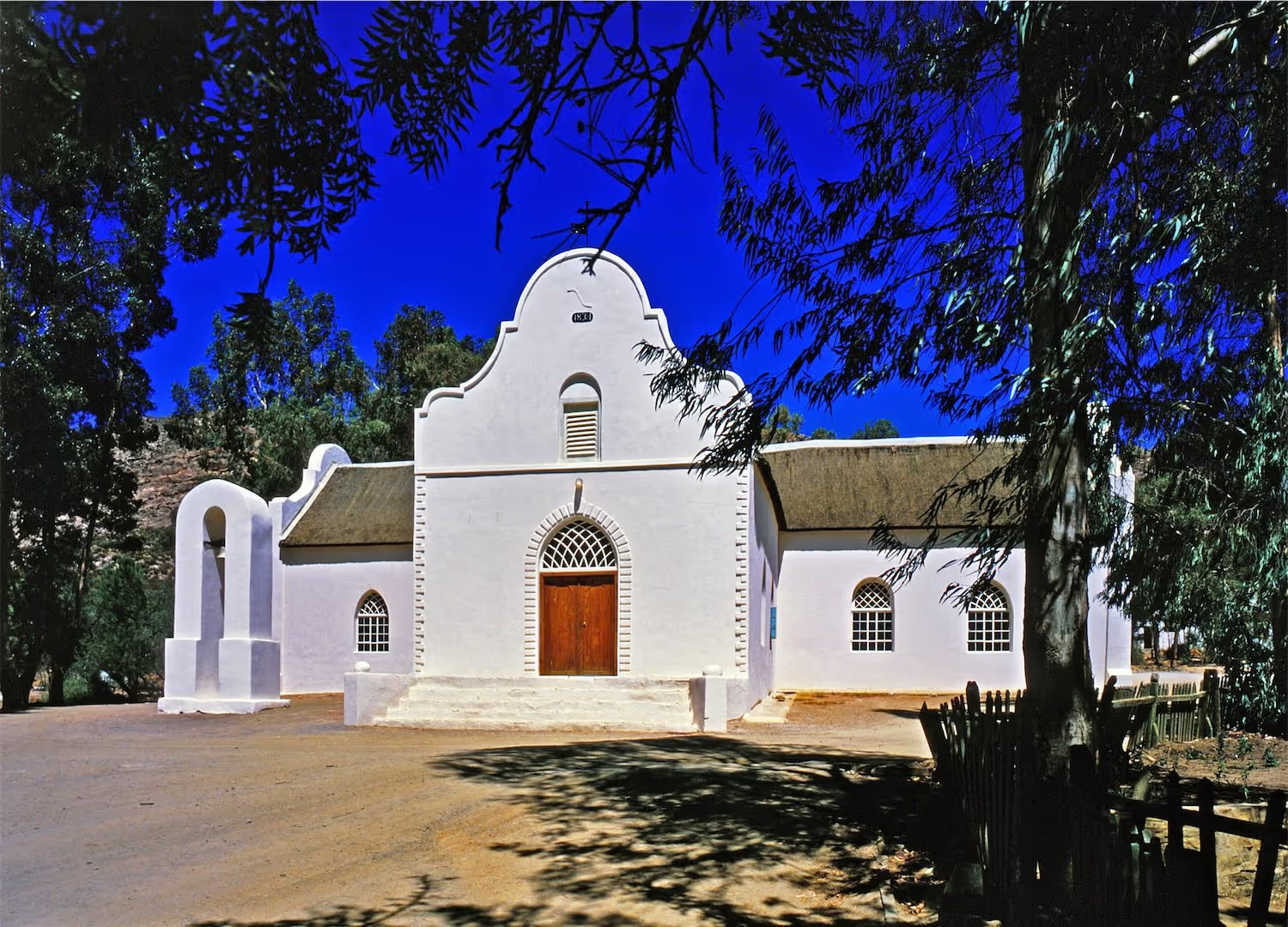
A Rhenish and then Moravian mission village in the Cederberg mountains, founded in 1830, where whitewashed thatched cottages are arranged around a central church and the community still makes hand-sewn veldskoen as it has for nearly 200 years.
Town Info
- ProvinceWestern Cape
- DistrictWest Coast District Municipality
- MunicipalityCederberg Local Municipality
- Population7,400
- Postal Code8138
About the Town
In 1830, two German missionaries of the Rhenish Missionary Society — Theobald von Wurmb and Johann Gottlieb Leipoldt — established a mission station in the Biedouw Valley of the northern Cederberg, about 70 kilometres from Clanwilliam. They named it after the German city of Wuppertal. When slavery was abolished in 1838, freed slaves from nearby farms arrived at the settlement, and the community grew around the mission station and its church. In 1966, the Rhenish church transferred the station to the Moravian church, which still operates it today.
What you find when you arrive — after 30 or more kilometres of gravel road through the Cederberg — is a row of whitewashed, thatched-roof cottages arranged along a lane leading to the central church complex. It looks like a painting of a mission village and it is, exactly, a mission village. The architecture is intact. The church still holds services. The main cash crop on the surrounding land is rooibos tea, and small-scale agriculture keeps the community partially self-sufficient.
Wuppertal is the central station for about 14 outpost villages scattered through the northern Cederberg mountains. The veldskoen shoe factory, founded by Johann Leipoldt himself in the 19th century, produced hand-sewn suede shoes famous across South Africa for over a century. The factory still operates. If you go, buy a pair.
The road is 30 kilometres of gravel from the nearest tar, which acts as a natural filter. The Cederberg Wilderness Area surrounds the valley. The isolation, the preserved architecture, the rooibos landscape, and the continuing community practice of a tradition that started 195 years ago make this one of the most distinctive places in the Western Cape.
Eat, sleep and drink
Where to eat
Where to sleep
Where to drink
Do you know this town better than I do?
If you live here, grew up here, or spent real time here, I want to hear from you. A photo, a correction, a story, a tip. Anything that makes this page more honest is welcome.
Join the Community
200,000+ South Africans already in the Facebook group. Weekly small-town stories, road trip tips, and hidden gems.